By 2026, over 60% of current job roles will require skills that traditional classrooms don’t actively teach. The classroom of yesterday looks vastly different from the learning environment students need today. While traditional education has served generations well, the rapid pace of technological advancement and evolving job market demands have exposed significant gaps in conventional teaching methods. The question isn’t whether traditional education has value—it absolutely does—but whether it alone can prepare students for an increasingly complex, digital-first world.
The Limitations of Traditional Education Models
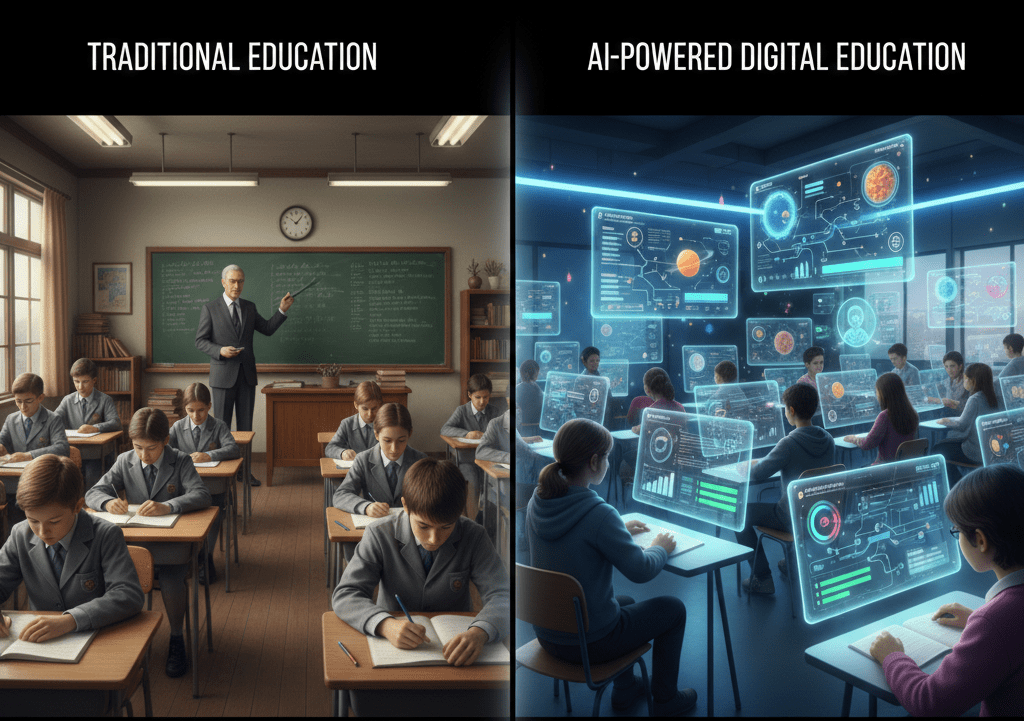
Traditional education systems were designed during the industrial era, built around standardized curricula and one-size-fits-all teaching approaches. Students move through grades at the same pace, take identical tests, and receive uniform instruction regardless of their individual learning styles or career aspirations.
This standardized approach creates several problems. First, it fails to account for diverse learning speeds. Some students grasp concepts quickly and become bored, while others struggle to keep up and fall behind. Second, traditional assessments focus heavily on memorization rather than critical thinking, problem-solving, or creativity—skills that matter most in modern workplaces.
Furthermore, traditional education often lags behind industry developments. By the time curricula are updated to include new technologies or methodologies, those innovations may already be outdated. This disconnect leaves graduates unprepared for real-world challenges and emerging career opportunities.
Why Today’s Learners Need More
The modern world demands skills that traditional classrooms rarely emphasize. Employers seek candidates who can adapt quickly, think critically, collaborate across cultures, and leverage technology effectively. Yet conventional education systems remain focused on rote learning and standardized testing.
Students today also have access to unlimited information through the internet, making knowledge acquisition less about memorization and more about understanding, application, and synthesis. The role of education must shift from information delivery to skill development and personalized guidance.
Additionally, career paths have become non-linear. Professionals frequently change roles, industries, and even careers multiple times throughout their working lives. Traditional education, which often prepares students for single career trajectories, doesn’t equip them with the adaptability required for this reality.
Real-World Example: AI in Action
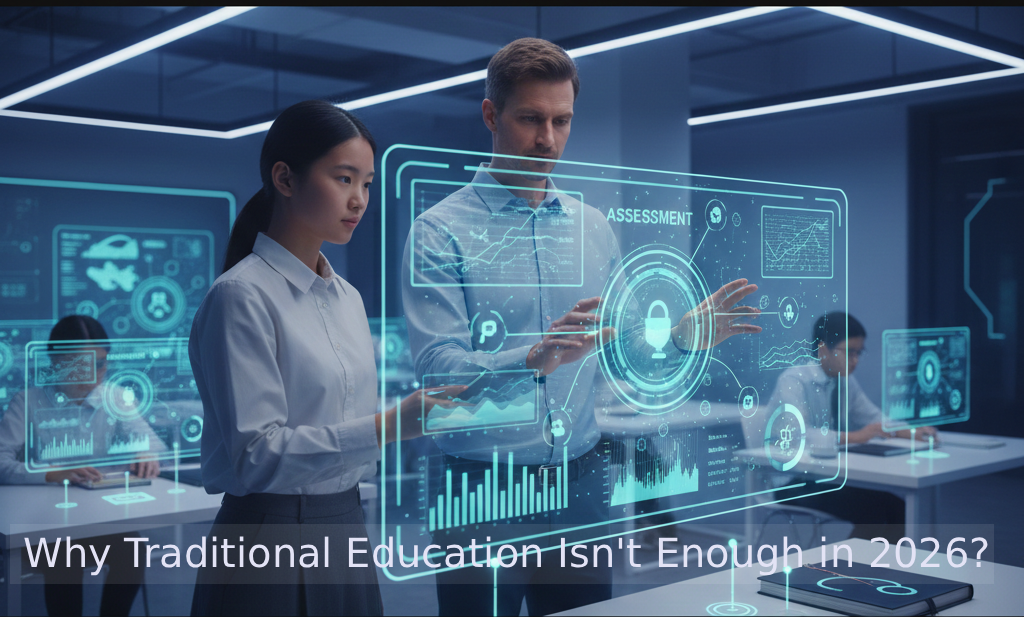
- A university student struggling with mathematics uses an AI-powered assessment platform that analyzes her quiz attempts, identifies gaps in foundational concepts, and instantly recommends targeted practice exercises.
- Instead of waiting weeks for exam results, she receives real-time feedback after every attempt, allowing her to correct mistakes immediately and progress at her own pace.
- At the same time, her instructor views a dashboard highlighting common problem areas across the class, enabling focused revision sessions rather than generic re-teaching.
- Over the semester, both student confidence and overall class performance improve—without increasing teacher workload.
This example shows how AI in education transforms learning from reactive to proactive, benefiting students through personalization while empowering educators with actionable insights.
How AI in Education Is Bridging the Gap
These challenges are not a reflection of ineffective educators or outdated intentions—they are the natural limitations of education systems designed for a very different era. Classrooms built around uniform pacing, static content, and delayed feedback simply cannot keep up with today’s dynamic learners and rapidly evolving skill requirements. To move beyond these constraints, education needs an approach that is flexible, adaptive, and data-driven by design. This is where AI in education becomes not just helpful, but essential.
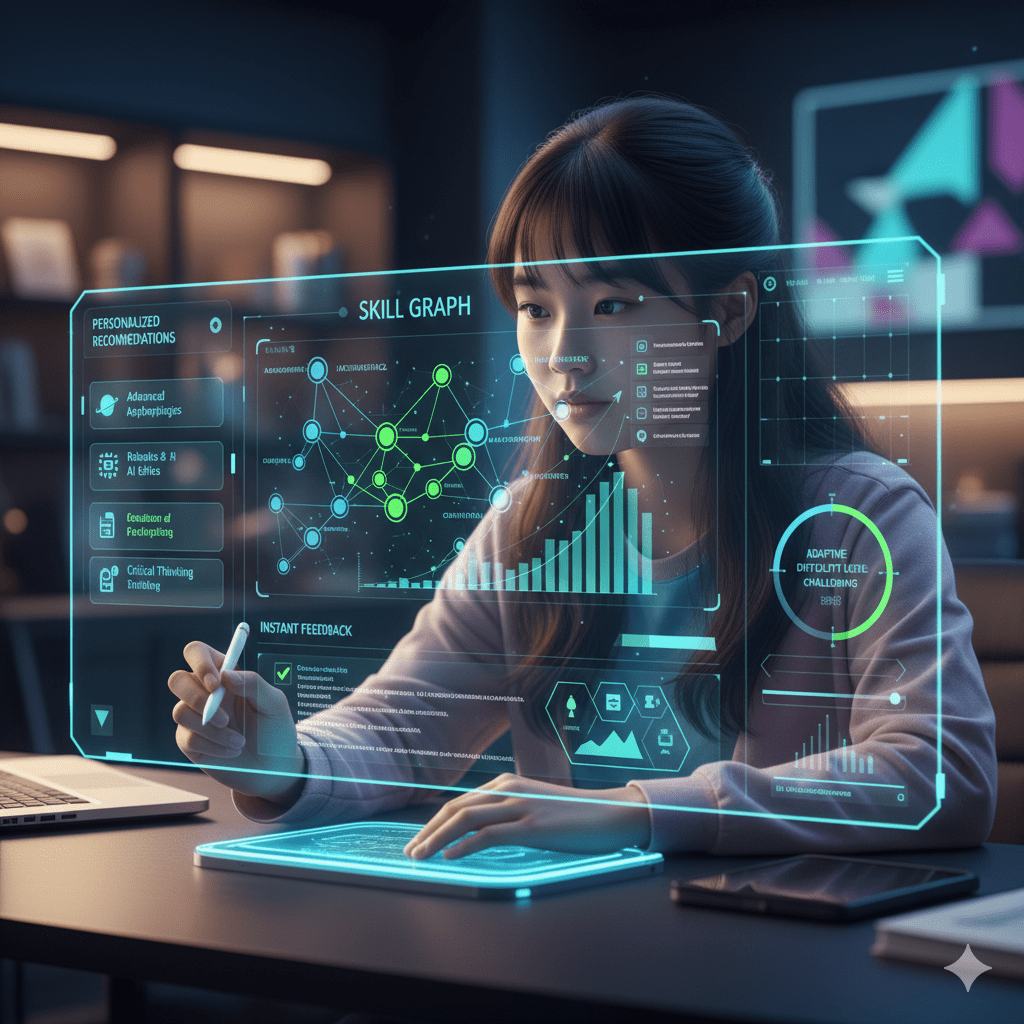
This is where AI in education emerges as a transformative force. Rather than replacing teachers or traditional methods, artificial intelligence enhances and personalizes the learning experience in ways that were previously impossible.
Personalized Learning Paths
AI in education enables truly individualized instruction. Advanced algorithms analyze each student’s strengths, weaknesses, learning pace, and preferences to create customized learning paths. If a student struggles with algebra but excels in geometry, AI-powered systems can provide additional algebra resources while advancing their geometry curriculum.
This personalization ensures that no student is held back by material they’ve already mastered, nor are they pushed ahead before they’re ready. The result is more efficient learning and better retention of concepts.
Intelligent Assessment and Feedback
Traditional assessments provide limited insights—typically just a grade or score weeks after completion. AI in education revolutionizes this through intelligent assessment tools that offer immediate, detailed feedback. These systems don’t just identify wrong answers; they analyze patterns in student responses to understand underlying misconceptions.
For educators, AI-powered assessment platforms like the upcoming AI Assessment tool from Newtum provide actionable insights into class-wide trends, helping teachers identify which concepts need reinforcement and which students require additional support. This data-driven approach makes teaching more effective and targeted.
Adaptive Learning Technologies
AI in education powers adaptive learning platforms that adjust difficulty levels in real-time based on student performance. If a learner answers several questions correctly, the system presents more challenging material. If they struggle, it offers additional practice at the current level or revisits foundational concepts.
This dynamic adjustment keeps students engaged—neither frustrated by content that’s too difficult nor bored by material that’s too easy. It creates a “Goldilocks zone” of learning where students are consistently challenged at just the right level.
24/7 Learning Support
Unlike traditional classroom settings limited to specific hours, AI in education provides round-the-clock support. AI-powered chatbots and tutoring systems can answer student questions, explain concepts, and provide practice problems anytime, anywhere. This accessibility is particularly valuable for students balancing education with work or family responsibilities.
Data-Driven Insights for Continuous Improvement
Traditional education often relies on intuition and experience when making pedagogical decisions. While valuable, these approaches lack the comprehensive data analysis that AI in education provides. AI systems track thousands of data points—time spent on tasks, question response patterns, engagement levels, and learning progress—to identify what works and what doesn’t.
Educators can use these insights to refine their teaching strategies, while institutions can improve curriculum design based on evidence rather than assumptions.
The Synergy: Traditional Education + AI
The goal isn’t to eliminate traditional education but to enhance it with AI capabilities. The human elements of education—mentorship, emotional support, ethical guidance, and social interaction—remain irreplaceable. Teachers bring empathy, creativity, and cultural context that no algorithm can replicate.
AI in education serves as a powerful assistant, handling time-consuming tasks like grading, providing personalized practice, and generating performance analytics. This frees educators to focus on what they do best: inspiring students, facilitating discussions, mentoring, and building relationships.
The most effective educational model combines the strengths of both approaches. Teachers provide the human connection and guidance, while AI delivers personalization, immediate feedback, and data-driven insights.
Preparing for an AI-Enhanced Future
As AI becomes increasingly integrated into education, students, educators, and institutions must adapt. This means embracing new tools and methodologies while maintaining focus on core educational values.
Platforms like Newtum are at the forefront of this transformation, developing AI Assessment tools that empower educators with intelligent analytics while supporting students with personalized feedback. These technologies don’t replace the teacher-student relationship; they enhance it by providing both parties with better information and more effective learning strategies.
The educational landscape will continue evolving, and those who embrace AI in education while preserving the irreplaceable human elements will be best positioned for success. Traditional education alone simply cannot keep pace with the demands of our rapidly changing world, but traditional education enhanced by artificial intelligence can prepare students for whatever future awaits them.
FUTURE-PROOFING SECTION (COPY-PASTE)
What Education Will Look Like Beyond 2026
Beyond 2026, education will move away from static syllabi and fixed learning timelines toward continuously adaptive learning ecosystems. AI-driven platforms will track skill development over time, allowing students to build competencies dynamically rather than progressing solely based on age or academic year.
Assessments will become more diagnostic than judgmental—focusing on identifying learning gaps, skill readiness, and growth potential instead of one-time exam performance. Educators will increasingly rely on intelligent analytics to personalize instruction, intervene early, and design learning experiences that align with real-world demands.
Most importantly, education will no longer be a one-time phase of life. As careers evolve faster than ever, AI in education will support lifelong learning—helping individuals reskill, upskill, and transition across roles with confidence. Institutions that embrace this shift early will not only stay relevant but will shape the future of how learning works in a digital-first world.
Conclusion
Traditional education has served society well for generations, but it was designed for a different era with different needs. Today’s learners require personalized, adaptive, and technology-enhanced educational experiences that prepare them for dynamic careers and continuous learning.
As education continues to evolve, institutions and educators must start exploring tools that support personalization, real-time feedback, and data-driven decision-making. Whether you’re an educator, academic leader, or institution planner, now is the time to explore AI assessment tools, see how AI can support educators, and prepare your institution for AI-driven learning—without losing the human connection that makes education meaningful.
AI in education isn’t about replacing teachers or abandoning proven pedagogical principles. It’s about augmenting human expertise with technological capabilities to create more effective, accessible, and personalized learning experiences. As we move forward, the question isn’t whether to adopt AI in education, but how quickly we can integrate these powerful tools to better serve every learner. Visit Newtum to go more about AI Assessment.
About The Author